
For anyone searching Do Muslims Celebrate Christmas, the answer depends on what is meant by “celebrate.” Islam honors Jesus (Isa) as a major prophet and recognizes Maryam as an honored woman, yet Islamic belief differs fundamentally from Christian teachings about Jesus’ divinity and Christmas. Because Christmas is a Christian religious festival, many Muslim scholars advise Muslims not to participate in its religious observances while still treating Christian neighbors, friends, and coworkers with kindness and fairness.
This guide explains the Islamic reasoning behind that position and explores practical questions about greetings, gifts, parties, decorations, trees, and workplace situations. If you have wondered Do Muslims celebrate Christmas in a multicultural society? The key is to distinguish respectful coexistence from taking part in another religion’s worship. The discussion below presents the core principles clearly while recognizing that some practical details are subject to scholarly disagreement.
Do Muslims Celebrate Christmas?
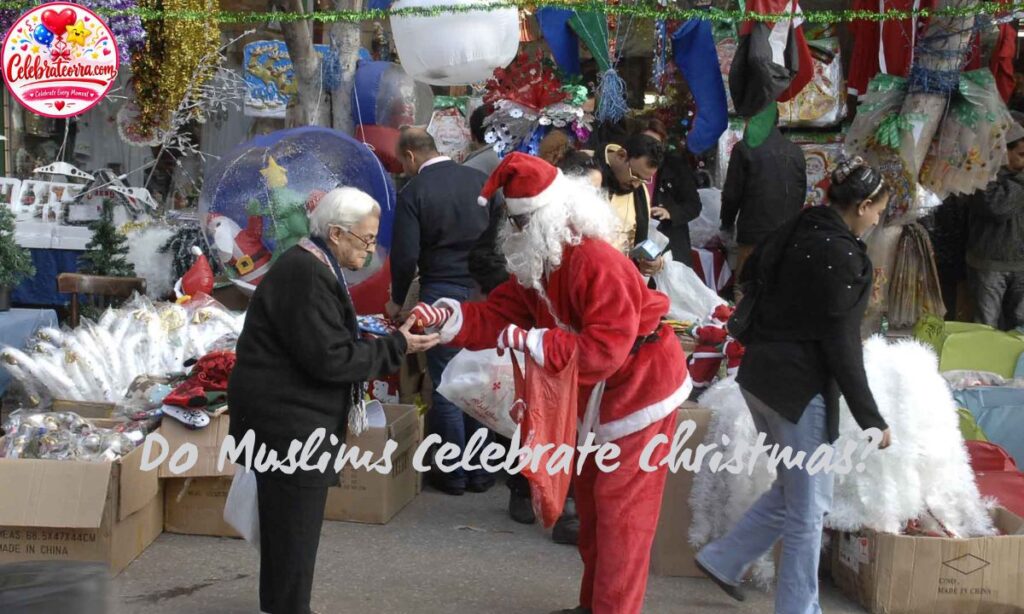
In mainstream Islamic understanding, Muslims do not observe Christmas as a religious holiday. The central reason is that Christmas is associated with Christian beliefs and worship surrounding the birth of Jesus Christ, while Islam has its own understanding of Jesus, his mission, and religious festivals.
So, Do Muslims Celebrate Christmas? Generally, no. Muslims traditionally celebrate the two Islamic festivals of Eid al-Fitr and Eid al-Adha rather than adopting religious celebrations belonging to another faith.
This does not mean Muslims are expected to be hostile toward Christians. Islamic teachings emphasize justice, good conduct, and respectful relations with people of other faiths. The International Islamic Fiqh Academy has also emphasized coexistence, justice, and the rights of non-Muslims.
The distinction is important: respecting another person’s religion is different from participating in that religion’s worship.
Is Christmas Haram in Islam?
When Muslims ask Do Muslims Celebrate Christmas from the perspective of Islamic law, the answer is generally connected to the concept of religious imitation and participation in non-Islamic religious rituals.
Many traditional Muslim scholars consider deliberately observing Christmas as a religious festival impermissible. Their reasoning is not based on hostility toward Christians. Instead, it is based on preserving Islamic religious identity and avoiding participation in another faith’s religious observances.
The exact ruling can depend on the activity. Attending a church service as a religious participant is very different from maintaining professional courtesy with a Christian colleague. Likewise, eating an ordinary meal with a neighbor is not automatically the same as joining a religious ceremony.
Muslims who need a ruling for a particular situation should consider their circumstances and consult a trusted, qualified scholar.
Why Muslims Do Not Celebrate Christmas
The question Do Muslims Celebrate Christmas becomes clearer when the distinction between religious beliefs and social customs is understood.
Christmas Has Religious Significance
For Christians, Christmas is connected with the birth of Jesus and carries important religious meaning. Muslims respect Jesus as Isa ibn Maryam, but they do not accept the Christian doctrine that Jesus is God or the Son of God in the theological sense rejected by Islam.
Islam Has Its Own Religious Festivals
Islamic worship includes specific festivals established within Islamic tradition. Muslims generally avoid introducing another religion’s sacred holiday into their own religious practice.
Religious Identity Matters
Islam encourages Muslims to maintain their beliefs while living peacefully with people who follow other faiths. The International Islamic Fiqh Academy has stressed preserving Islamic identity while also recognizing the importance of coexistence and constructive interaction.
Therefore, Do Muslims Celebrate Christmas is not simply a question about decorations or food. For practicing Muslims, it is primarily a question about religious participation.
What Does the Quran Say About Christmas?
The Quran does not mention Christmas by name because the modern Christmas observance developed after the Quranic revelation. Therefore, there is no Quranic verse that simply says, “Muslims must not celebrate Christmas.”
Instead, Islamic scholars derive guidance from broader Quranic principles concerning worship, religious beliefs, Jesus, and maintaining Islamic monotheism.
The Quran strongly rejects the belief that Allah is Jesus. In Surah Al-Ma’idah 5:72, it describes Jesus as calling the Children of Israel to worship Allah, his Lord and theirs.
This theological distinction is central to understanding Do Muslims Celebrate Christmas. Muslims can deeply honor Jesus without accepting the Christian understanding of his divine nature.
The Quran also teaches Muslims to act justly and kindly toward people who do not fight them because of religion. This provides an important foundation for peaceful relationships without requiring Muslims to adopt another religion’s worship.
What Does Islam Say About Jesus (Isa)?
Islam gives Jesus, known as Isa, a highly respected position. He is regarded as one of the great prophets and messengers of Allah.
Jesus in Islamic Belief
Muslims believe Jesus was born miraculously to Maryam, or Mary. His birth is presented as a remarkable sign of God’s power, and Maryam is honored in the Quran.
Muslims also believe that Jesus performed miracles by God’s permission and delivered a message calling people toward worship of Allah.
Jesus Is Not Worshiped
The major theological difference concerns Jesus’ nature. Islam teaches absolute monotheism and does not accept Jesus as God.
The Quran explicitly presents Jesus as a servant and messenger who called people toward worship of Allah.
This explains why Do Muslims Celebrate Christmas cannot be answered only by saying Muslims “do not like Christmas.” The issue is rooted in fundamental differences about religious belief.
For Muslims, honoring Isa does not require celebrating a festival centered on theological beliefs they do not share.
Can Muslims Wish “Merry Christmas”?
Whether a Muslim may say “Merry Christmas” is one of the most debated practical questions surrounding Do Muslims Celebrate Christmas.
Scholars have differed on how Muslims should respond to Christmas greetings. Some take a stricter view and advise against using a greeting that explicitly celebrates another religion’s festival. Others distinguish between endorsing a religious belief and showing ordinary social courtesy, especially in workplaces and diverse communities.
A Muslim who wants to avoid religious endorsement can choose a neutral response such as “Thank you,” “I appreciate your kindness,” or “I hope you have a peaceful holiday.”
The safest approach for someone concerned about a specific school, workplace, family, or community situation is to follow the guidance of a knowledgeable scholar whose interpretation they trust.
Can Muslims Attend Christmas Celebrations?
The answer depends heavily on what “celebration” involves. A religious service, prayer, or ritual is fundamentally different from an ordinary social gathering.
For many scholars, Do Muslims Celebrate Christmas also means asking whether attending an event could reasonably be understood as participating in the religious festival.
Religious Events
Participating in Christmas Mass, prayers, hymns as acts of worship, or other explicitly religious ceremonies is generally viewed by traditional Islamic scholarship as impermissible.
Social and Workplace Events
A workplace may organize a seasonal dinner or end-of-year gathering without making it a religious ceremony. Muslims may evaluate the event’s activities, setting, food, and purpose before deciding whether attendance is appropriate.
The principle of peaceful coexistence remains important. Islamic institutions have emphasized that differences in religion should not prevent cooperation for human welfare and respectful social relationships.
Is a Christmas Tree Allowed in Islam?
For people asking Do Muslims Celebrate Christmas, the Christmas tree raises a separate question because it is widely recognized as a symbol of the holiday.
Muslims who follow the traditional scholarly position generally avoid putting up a Christmas tree as part of their home decorations. The concern is that intentionally displaying a distinctly Christmas symbol may amount to participating in or identifying with another religion’s festival.
However, context matters. A Muslim child may encounter Christmas trees in a school, shopping center, workplace, or public space. Simply seeing or being around a decoration is obviously different from deliberately placing one in the home to observe Christmas.
The broader Islamic concern is therefore intentional participation rather than ordinary contact with people or public environments.
Can Muslims Give Christmas Gifts?
Gift giving requires more context than a simple yes-or-no answer. When considering Do Muslims Celebrate Christmas, Muslims may distinguish between giving a present specifically to honor Christmas and giving an ordinary gift as an expression of friendship or professional courtesy.
Some scholars discourage gifts that are explicitly connected to celebrating Christmas, particularly when the gift contributes directly to a religious observance. Other contemporary discussions distinguish between religious participation and ordinary kindness toward non-Muslim neighbors, relatives, or coworkers.
A Muslim might therefore choose a neutral gift on another occasion, such as a birthday, a family gathering, or an ordinary act of friendship.
Islamic teachings about kindness and justice toward peaceful non-Muslims provide an important social framework. The International Islamic Fiqh Academy recognizes the rights of non-Muslims and emphasizes respectful coexistence.
Read More: https://celebrateorra.com/celebrity-pussy/
Can Muslims Decorate for Christmas?
Decorating the home specifically for Christmas is generally discouraged or prohibited by scholars who consider Christmas a religious festival that Muslims should not observe.
The question Do Muslims Celebrate Christmas is relevant here because decorations can communicate participation even when no religious ceremony takes place.
There is also a distinction between Christmas-specific decorations and ordinary winter decorations. Lights, candles, snowflakes, neutral greenery, or seasonal home décor do not necessarily carry the same religious meaning as a nativity display, Christmas tree, or explicitly Christian symbol.
For Muslims living in countries where Christmas is widely observed, seeing public decorations does not itself make them participants. Personal intention and the nature of the activity remain important considerations.
Christmas and New Year: Islamic Guidelines
Christmas and New Year are often treated as one long holiday season, but they have different cultural and historical associations. Muslims may therefore consider them separately rather than assuming that the ruling for one automatically determines the ruling for the other.
When considering Do Muslims Celebrate Christmas, it is useful to remember that Christmas is traditionally a Christian religious festival, while New Year’s celebrations are commonly treated as secular or cultural events in many societies.
Avoiding Religious Participation
Muslims generally avoid participating in religious ceremonies that contradict Islamic beliefs. This principle is particularly relevant to Christmas worship.
Handling Secular Events
A New Year’s workplace meal, calendar-related event, or ordinary social gathering may raise different questions. Muslims can consider whether the event includes prohibited activities, religious rituals, intoxication, inappropriate entertainment, or other conduct prohibited in Islam.
Maintaining Good Relations
Islamic guidance does not require Muslims to isolate themselves from people of other religions. The International Islamic Fiqh Academy has emphasized peaceful coexistence, justice, and cooperation in matters of human welfare.
Thus, Do Muslims Celebrate Christmas should not be interpreted as a question about whether Muslims can live, work, study, or socialize peacefully with Christians. They can maintain respectful relationships while preserving their own religious practices.
How Should Muslims Respond to Christmas Greetings?
A polite response can help Muslims maintain good relationships without feeling that they must compromise their beliefs. For people researching Do Muslims Celebrate Christmas, this is often one of the most practical everyday questions.
A Muslim who does not want to return a religious greeting can respond courteously with neutral words such as “Thank you,” “I appreciate that,” or “Wishing you a peaceful holiday season.”
Someone who follows a scholarly opinion permitting certain courteous greetings may choose a more direct response. The important distinction is between social courtesy and affirming a religious doctrine.
Muslims are also expected to behave with fairness and good character toward peaceful people of other faiths. Islamic institutions have highlighted tolerance, justice, and coexistence as important aspects of relations between religious communities.
Ultimately, Do Muslims Celebrate Christmas has a generally clear answer regarding religious observance, but individual social situations can involve legitimate differences of scholarly interpretation.
Frequently Asked Questions
Do Muslims Celebrate Christmas as a Religious Holiday?
No, Muslims generally do not observe Christmas as an Islamic religious holiday because it belongs to Christian religious tradition.
Do Muslims Celebrate Christmas is therefore usually answered by distinguishing respect for Christians from participation in Christian worship.
Do Muslims believe in Jesus?
Yes, Muslims believe Jesus, or Isa, was a major prophet and messenger of Allah and was born miraculously to Maryam.
Islam does not, however, teach that Jesus is divine or should be worshiped as God.
Can Muslims be friends with Christians during Christmas?
Yes, Muslims can maintain respectful friendships and peaceful relationships with Christians while observing their own religious boundaries.
Kindness, fairness, and coexistence do not require accepting another religion’s theological beliefs.
Is saying “Merry Christmas” always forbidden for Muslims?
There is scholarly disagreement about courteous Christmas greetings, with some scholars taking a strict position and others distinguishing courtesy from religious endorsement.
A Muslim can seek guidance from a trusted scholar and use a neutral greeting if they prefer to avoid ambiguity.
Can Muslims accept Christmas food from neighbors?
This depends on the food itself, how it was prepared, and whether accepting it would constitute participation in a religious ritual.
The question Do Muslims celebrate Christmas should therefore be separated from ordinary hospitality and lawful food shared between neighbors.
Conclusion
For Muslims, the question Do Muslims Celebrate Christmas ultimately centers on religious identity rather than hostility toward another faith. Islam recognizes Jesus as an honored prophet, respects Maryam, and acknowledges the extraordinary nature of Jesus’ birth, while rejecting theological beliefs that conflict with Islamic monotheism. That distinction explains why Muslims generally do not observe Christmas as a religious festival.
At the same time, Islamic principles support justice, good character, and peaceful coexistence with people of other faiths. Muslims can live alongside Christian friends, relatives, coworkers, and neighbors without adopting Christian worship. Understanding Do Muslims Celebrate Christmas therefore requires both sides of the issue: preserving Islamic beliefs while treating others with dignity, courtesy, and fairness. The result is a balanced approach that respects religious boundaries without encouraging unnecessary division.

David Smith is a creative writer who shares heartfelt wishes, quotes, and ideas to make every moment special.