
Children learn how to understand the world by watching the people around them. When adults model curiosity, fairness, and kindness, children become more comfortable with people whose cultures, abilities, family structures, languages, or traditions may differ from their own. Celebrate Our Differences is a simple idea that can shape those everyday lessons.
Teaching children to celebrate differences does not mean pretending everyone is the same. It means helping them recognize what makes each person unique while emphasizing shared human values such as dignity, friendship, safety, and respect. With thoughtful conversations, inclusive books, creative activities, and positive examples, families and teachers can make diversity a natural part of childhood learning.
What Does Celebrate Our Differences Mean?
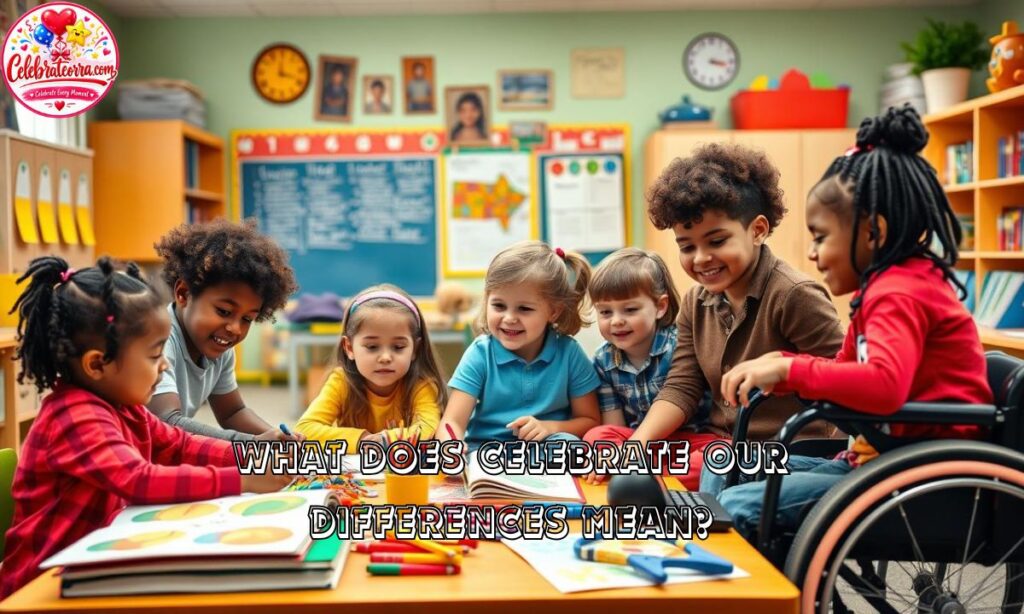
Celebrate Our Differences means recognizing and appreciating the qualities that make people unique. These qualities can include culture, race, language, religion, nationality, disability, personality, interests, family background, and personal experiences. The goal is not to rank differences or turn them into stereotypes, but to understand them with openness and respect.
For children, the message can be simple: people may look, speak, move, learn, worship, celebrate, or live differently, and everyone deserves kindness. Celebrate Our Differences encourages children to ask respectful questions, listen carefully, and avoid judging someone because they do not share the same experiences.
A useful approach is to focus on both differences and common ground. Children can learn that classmates may have different traditions while still enjoying the same games, stories, jokes, friendships, and hopes. Celebrate Our Differences becomes meaningful when diversity is treated as a normal and valuable part of community life.
Why Celebrating Differences Matters
Children naturally notice differences. What matters is how adults respond when children ask questions about appearance, language, disability, clothing, family life, or culture. Honest, age appropriate answers can replace confusion with understanding and help children develop a healthier view of diversity.
Celebrate Our Differences can also reduce exclusion. When children learn that every person has a story and deserves respect, they are better prepared to include classmates who might otherwise feel left out. This can strengthen classroom relationships and encourage cooperation.
Adults should avoid presenting one person as a spokesperson for an entire group. Instead, they can explain that people within the same culture or identity are individuals with varied personalities and experiences. This balanced approach helps children appreciate diversity without creating stereotypes.
Teaching Children About Diversity
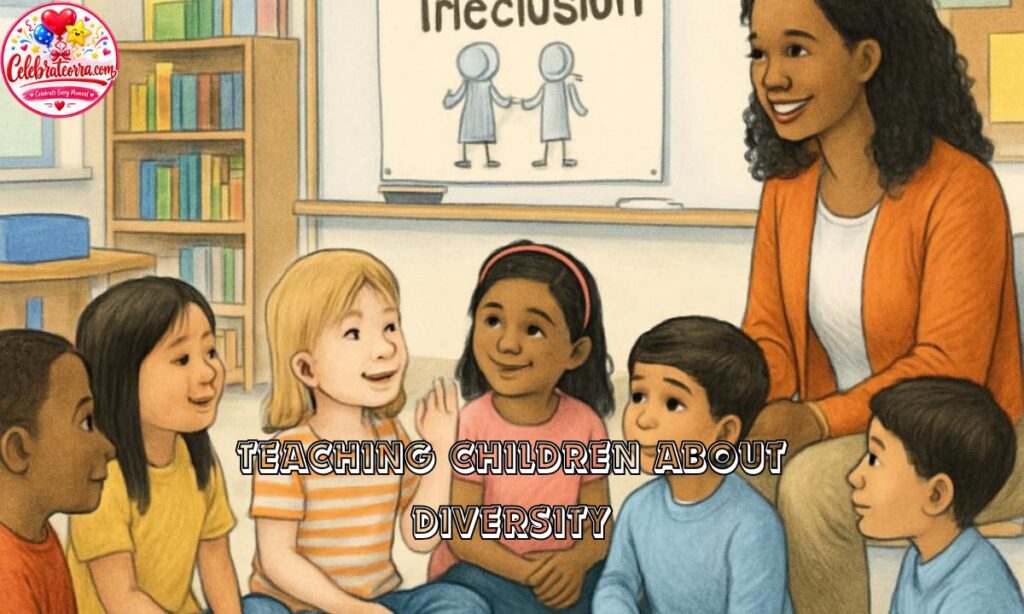
Teaching diversity works best when it becomes part of everyday learning rather than a lesson reserved for special occasions. Parents and teachers can introduce different cultures, languages, abilities, family structures, and traditions through stories, classroom discussions, art, music, food, and community experiences.
Celebrate Our Differences can be introduced through simple questions such as, “What is something special about your family?” or “What can we learn from someone who has a different experience?” These questions invite children to share without suggesting that one background is more important than another.
Adults should also check their own assumptions. Children notice when adults treat some traditions, accents, abilities, or families as more normal than others. Inclusive teaching requires consistent respect, thoughtful language, and a willingness to correct mistakes.
Understanding Different Identities
Children develop a sense of identity through family, community, language, interests, traditions, and personal experiences. Adults can help them understand that identity has many parts and can be different for every person.
Celebrate Our Differences means giving children room to describe themselves while allowing others to describe themselves in their own words. For example, a child may be proud of a language spoken at home, a family tradition, a disability community, or a cultural celebration. Listening without making assumptions builds trust.
Identity conversations should remain age appropriate. Young children often benefit from concrete examples, while older children can explore fairness, stereotypes, belonging, and social expectations more deeply. The goal is understanding, not forcing children into labels.
Building Empathy and Respect
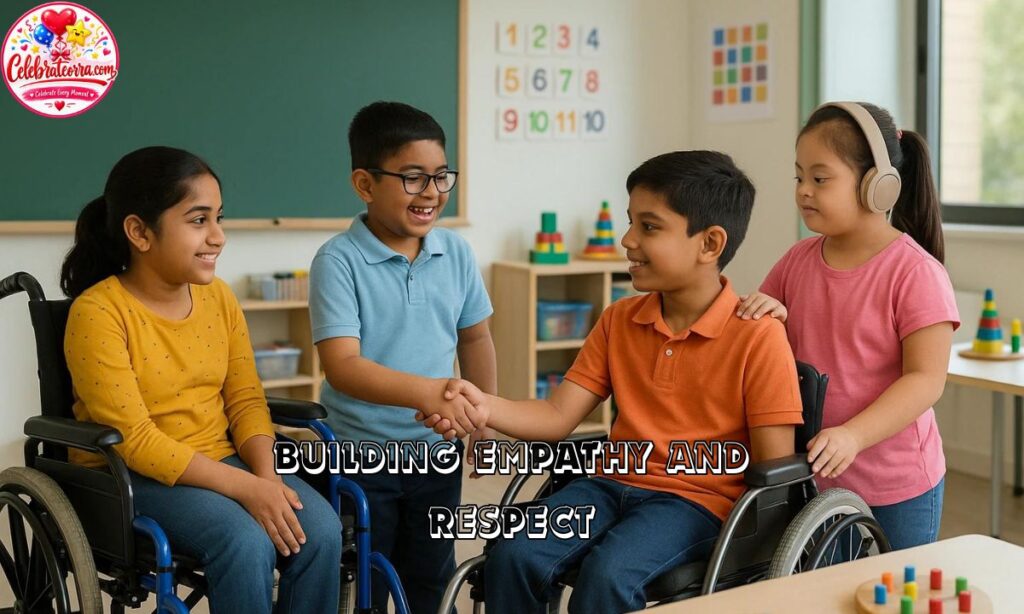
Empathy grows when children learn to imagine how another person might feel. Adults can use stories and everyday situations to ask, “How might that person feel?” and “What could you do to help?” Such questions move children beyond simply noticing differences.
Celebrate Our Differences becomes stronger when empathy is connected to action. Children can practice inviting someone into a game, listening when a classmate speaks, learning how to pronounce a name correctly, or asking before making assumptions.
Respect also means recognizing boundaries. Children should understand that curiosity does not give them permission to touch another person’s body, belongings, mobility equipment, hair, clothing, or personal items without consent.
How to Teach Kids Acceptance
Acceptance begins with everyday behavior. Parents and teachers can model inclusive language, challenge stereotypes, and respond calmly when children repeat something unfair or inaccurate. Instead of shaming a child for asking a question, adults can explain why certain words or assumptions may hurt others.
Celebrate Our Differences can be reinforced by praising inclusive behavior. Notice when a child shares, listens, welcomes someone into a group, or speaks up kindly when another child is excluded. Specific praise helps children understand which behaviors create a respectful community.
It is also helpful to teach children that fairness does not always mean giving everyone exactly the same thing. Some people may need different support to participate fully. This lesson can build understanding of accessibility and encourage children to see support as a way of creating opportunity.
Activities That Celebrate Differences
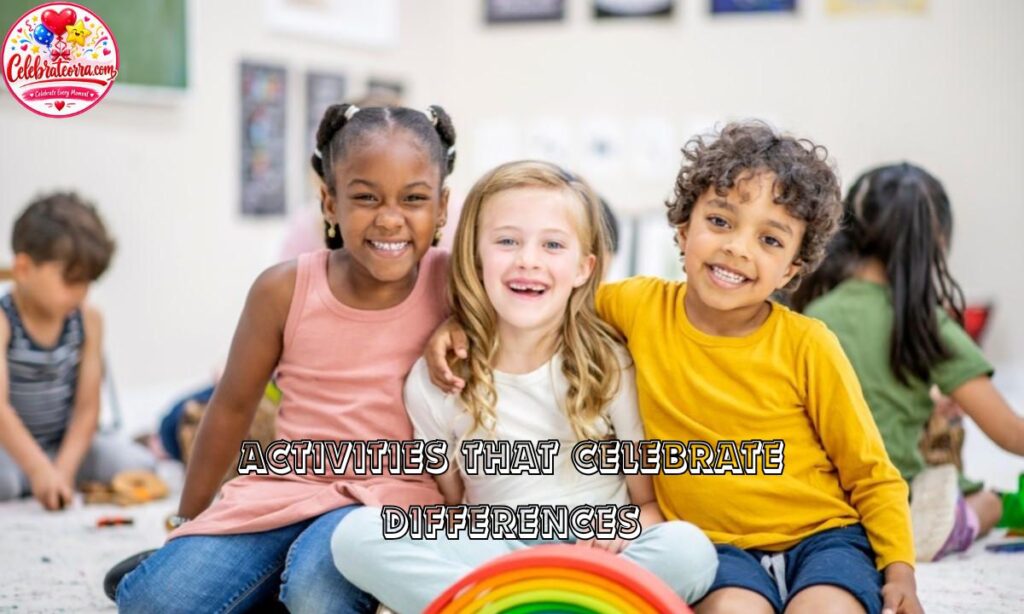
Hands-on activities can make diversity easier for children to understand. Keep them authentic and avoid turning cultures or identities into costumes or stereotypes.
Try activities such as:
- Create a family tradition collage showing different celebrations, foods, languages, or routines.
- Invite children to share a favorite word from a language they know.
- Read stories featuring characters with different cultures, abilities, and family structures.
- Build an “all about us” classroom display focused on interests and strengths.
- Practice inclusive playground games where everyone can participate.
- Ask children to write one way they are unique and one value they share with others.
Celebrate Our Differences works especially well when activities invite participation without requiring children to reveal personal information they would rather keep private.
Using Books to Teach Diversity
Books give children opportunities to meet characters and experiences beyond their immediate surroundings. Choose stories with authentic representation, multidimensional characters, and age appropriate themes. A diverse book collection should not only describe hardship; it should also show friendship, humor, creativity, family life, achievement, and ordinary moments.
After reading, ask children what they noticed about the character, what the character needed, and what the child reader can learn from the story. Avoid turning every book about diversity into a lesson about difference. Sometimes simply enjoying a story with a diverse main character is valuable.
Celebrate Our Differences can become part of family reading routines when adults discuss characters naturally. Parents can ask children how a character’s experiences compare with their own without suggesting that every person from a group shares the same experience.
Read More: https://celebrateorra.com/happy-sunday-wishes/
Celebrate Differences at Home
Home is one of the most influential places for learning acceptance. Children listen to how adults talk about neighbors, relatives, public figures, workers, classmates, and people they see in media. Respectful language at home can make inclusion feel normal rather than unusual.
Families can Celebrate Our Differences by learning about cultures through reliable sources, visiting community events, trying new foods respectfully, listening to different kinds of music, and discussing the many ways families live and celebrate.
Parents should also make space for children to talk about moments when they felt different or excluded. Listening without immediately correcting or minimizing their feelings can help children become more comfortable discussing belonging and fairness.
Encouraging Inclusive Conversations
Good conversations begin with curiosity rather than judgment. If a child asks why someone uses a wheelchair or speaks another language, answer directly in simple language. If you do not know the answer, say so and find a reliable source together.
Celebrate Our Differences can guide conversations about disagreement too. Children can learn that respecting someone does not require agreeing with every opinion. They can listen, ask questions, use polite language, and understand that people have different experiences.
Adults should correct stereotypes clearly. A helpful response might be, “People in that group are not all the same. Let’s learn about the individual instead of making assumptions.” This teaches children to replace labels with curiosity.
Benefits of Teaching Acceptance
Teaching acceptance can support stronger friendships, better cooperation, and a greater sense of belonging. Children who understand diversity are better prepared to participate in classrooms and communities where people have different experiences and needs.
Celebrate Our Differences also encourages flexible thinking. Children learn that there can be more than one way to communicate, celebrate, solve a problem, organize a family, or participate in an activity. That flexibility can support respectful relationships throughout life.
Other benefits may include:
- Greater empathy
- More inclusive friendships
- Stronger communication skills
- Reduced reliance on stereotypes
- Better cooperation
- Increased confidence in social situations
- A stronger sense of belonging
Resources for Parents and Teachers
Parents and educators can find useful diversity resources through established educational, literacy, disability awareness, and child development organizations. When choosing materials, look for sources that provide age appropriate guidance, accurate representation, and practical strategies rather than stereotypes or sensational claims.
Celebrate Our Differences can be supported by classroom libraries, family discussion guides, inclusive lesson plans, community organizations, museums, and public libraries. Teachers can also consult school counselors, special education professionals, librarians, and families when planning inclusive learning experiences.
Useful resource categories include:
- Children’s books from diverse authors and perspectives
- Anti bullying and social emotional learning materials
- Disability awareness resources
- Multicultural education guides
- Community cultural organizations
- Public library reading lists
- Age appropriate media literacy resources
Frequently Asked Questions
What Does Celebrate Our Differences Teach Children?
Celebrate Our Differences teaches children to recognize individuality while treating every person with dignity. It encourages curiosity, empathy, inclusion, and respect for different cultures, abilities, identities, languages, and family experiences. The approach helps children understand that diversity is a normal part of life and that differences should never be used as reasons for exclusion.
How Can Parents Celebrate Our Differences at Home?
Parents can Celebrate Our Differences by using respectful language, reading diverse children’s books, discussing different traditions, welcoming questions, and modeling inclusive behavior. Families can also explore community events and learn from reliable cultural resources. Most importantly, parents should show children that every person deserves kindness, even when their experiences or backgrounds are unfamiliar.
Why Is It Important to Celebrate Our Differences in School?
Schools bring together children with many backgrounds and experiences, making them important places for learning acceptance. This approach helps students practice respectful communication, cooperation, and inclusion. When teachers create classrooms where students feel valued, children are more likely to participate confidently and develop positive relationships with peers.
What Are Simple Activities to Celebrate Our Differences?
Simple activities include sharing family traditions, reading diverse stories, learning greetings in different languages, creating inclusive classroom displays, and discussing characters from varied backgrounds. Celebrate Our Differences activities should remain respectful and voluntary. They should never ask a child to represent an entire culture or reveal personal information they would prefer to keep private.
How Can Teachers Avoid Stereotypes When Teaching Diversity?
Teachers can avoid stereotypes by using reliable sources, choosing authentic and varied representation, and showing people as individuals rather than symbols of a group. Celebrate Our Differences should include ordinary experiences as well as discussions of challenges. Teachers can also invite questions, correct inaccurate assumptions, and review classroom materials for biased or one dimensional portrayals.
Conclusion
Teaching children to appreciate diversity is not a one day lesson; it is an ongoing practice built through language, examples, relationships, and everyday choices. Celebrate Our Differences gives families and educators a practical way to help children notice individuality while protecting the dignity and belonging of every child. These lessons can influence friendships, classroom behavior, and attitudes for years.
When adults listen carefully, challenge stereotypes, and create welcoming spaces, children gain skills that reach far beyond the classroom. They learn empathy, cooperation, confidence, and respect for people with different experiences. Celebrate Our Differences can therefore become more than a phrase: it can guide children toward kinder friendships, stronger communities, and a more welcoming world where every child feels seen, valued, respected, and included.

David Smith is a creative writer who shares heartfelt wishes, quotes, and ideas to make every moment special.